
HVAC technicians are vital in maintaining a comfortable and clean indoor environment, as well as food production and storage. From the manufacturer to the retailer, at home or at work, if it must be heated, cooled and conditioned, there is an HVAC-R technician making it happen. The future for HVAC technicians looks bright, with jobs expected to be available for some time to come.[1]
Find out more about what an HVAC technician does, the education required to become a technician and more facts you need to begin your HVAC technician training.
HVAC-R technicians – which stands for heating, ventilation, air conditioning and refrigeration – oversee systems that control the humidity, temperature and overall air quality in homes, businesses and other buildings. HVAC techs play a vital role in sustaining climate-controlled environments, making it possible for food, medicine and other perishable items to be stored and transported.
Some techs specialize in such areas as commercial refrigeration, radiant heating systems, solar panels, or testing and balancing.
HVAC installers are mainly responsible for setting up systems. Installers typically work with builders and property owners to replace existing systems and install new equipment on structures still being constructed. Because of this, they tend to be more involved in the construction industry than technicians.
Once setup is done, it now becomes the responsibility of the HVAC technician to maintain and repair these systems. Because of their duties, HVAC techs are more likely to work alone, and in direct contact with clients and customers. HVAC technicians may be on call and can work irregular hours since they are called upon to fix malfunctioning systems.[2]
Typically, HVAC-R technicians are full time employees, and will work until the job is done. Employers assign HVAC techs to resolve customer issues. Self-employed technicians may be contacted directly by customers.
Daily duties may involve troubleshooting failures, analyzing system data, customer education, sales, report writing and.
An HVAC technician’s job duties often includes:[3]
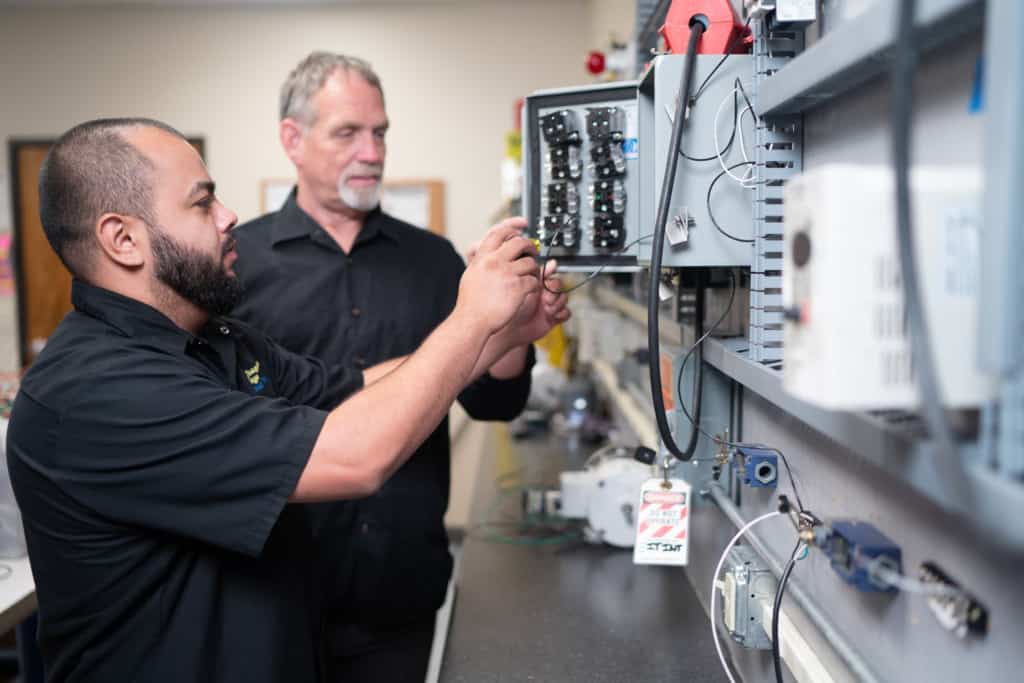 Why Become an HVAC Technician?
HVAC technician jobs are expected to be good over the next decade. [1] The growth in sophisticated climate-control systems should also drive demand for HVAC-R technicians.
The BLS also says that although HVAC-R installers may experience up and down periods of employment, maintenance and repair work usually remains stable.
There are a few steps to take if you’re interested in being an HVAC technician. Typically, technicians should have a postsecondary education, some specialized training and work experience. Here are some of the milestones along the road to becoming an HVAC technician.[5]
Many HVAC technicians receive postsecondary instruction from technical and trade schools or community colleges. These heating, ventilation, air conditioning and refrigeration (sometimes called HVAC-R) programs can be completed in as little as 10 months and lead to a certificate of completion.
New HVAC techs usually work alongside experienced technicians. At first, they perform basic tasks of maintenance and cleaning, but with experience will move on to more difficult tasks, such as brazing/welding refrigerant piping, troubleshooting electrical circuits and major component replacements.
Some techs may instead be trained through apprenticeships, lasting from three to five years.
The U.S. Environmental Protection Agency requires certification for all technicians who buy, handle, or work with refrigerants. This is commonly called the Section 608 Universal certification. Many trade schools, unions and employer associations offer training programs to prepare students for the exam.
Some states and localities may require additional HVAC technician certification, licensure or registration to work.
In California, HVAC technicians aren’t required to be licensed, but HVAC contractors must be. These licenses – Class C 20 Specialty Contractor License: Warm Air Heating, Ventilating and Air Conditioning – are issued by the California Department of Consumer Affairs Contractors State License Board. Contact the board for more information.[6]
Apprenticeships are traditionally used to teach someone a trade alongside a mentor. The apprenticeship is an on-the-job training program that bypasses college or vocational training. This type of training can take several years to become a journeyman and then a licensed Contractor.[7]
Apprenticeships are not required, though, especially for those who pursue an HVAC-R certificate.
Each state has its own requirements regarding unions and work. For example, California is not a right-to-work state, so an employer may require you to join a union as a condition of employment.[8] You can contact your own state’s labor agency to find out whether it requires union membership.
There are two major unions for HVAC technicians:
Each association offers information and apprenticeship programs for those interested in HVAC.
The EPA Section 608 Technician Certification is necessary for anyone handling refrigerants. There are several levels of this certification. There is also one certification that certifies excellence in the HVAC field.[11]
These certifications include:
HVAC technician jobs are available all over the nation. For those working in California, a tech only needs to join a union, join an HVAC company or just begin their own company.
HVAC technicians work mostly in factories, homes, hospitals, office buildings, schools or stores. The majority of HVAC techs (66%) work for plumbing, heating and air conditioning contractors.[12]
There are several large companies and contractors in Central California that hire HVAC technicians. Recently, Inc. published a list of the 5,000 fastest-growing private companies, which included three companies in the region.[13]
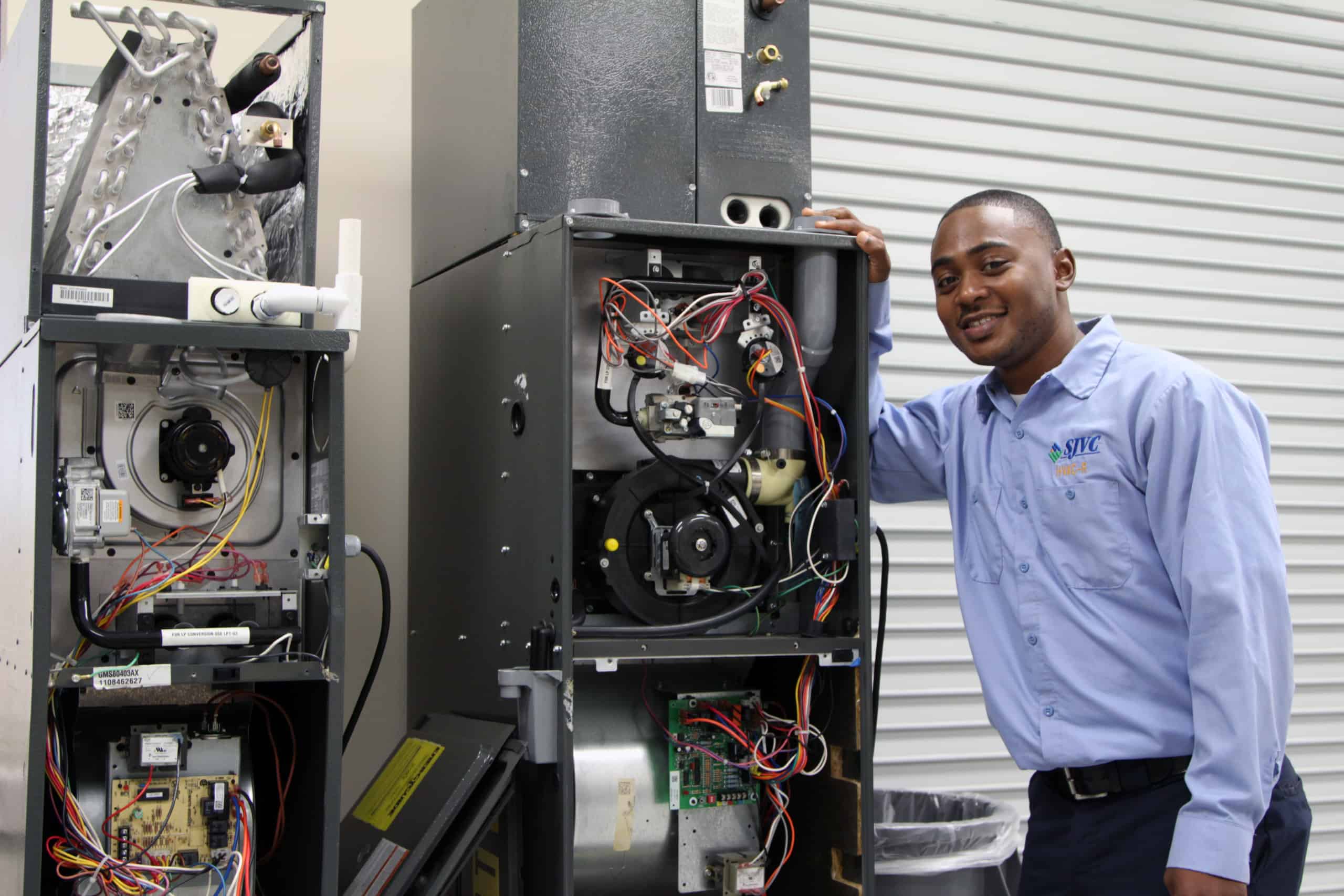 How Should I Choose HVAC Technician Training?
There are two main ways to get the training you’ll need, and the good news is that employers prefer either one for their applicants: postsecondary education, or apprenticeship.
With a postsecondary education, you’ll learn the ins and outs of the HVAC field, with hands-on instruction. Classes at HVAC schools also can teach you more in-depth skills and theory.
Apprenticeships let you begin working right away, with what is essentially on-the-job training, sometimes sponsored by a union that you’ll have to join. You can start earning money, but your education will be restricted to what you’re doing at the time, which may leave your knowledge narrow if you’re working in only one area of the HVAC field.
Apprentices usually earn about half of what experienced workers do. Their pay can increase as they learn more on the job.[4]
As with most education options, more school is generally more advantageous. A certificate will take only several months, and could lead to employment soon thereafter. An associate degree can take up to two years, but will give you broader knowledge with which to begin your HVAC career.
Many studies have shown over the years that those with a college degree can earn more money in their lifetime than those without one – as much as 75% more.[14]
HVAC training is best learned in person, since it’s a hands-on profession. There is little substitute for getting to work with the air conditioning, heating and other units in a real-life situation. There are also clear advantages to working side-by-side with an experienced HVAC technician.
Students in San Joaquin Valley College’s Heating, Ventilation, Air Conditioning and Refrigeration program learn:
Among the classes required in the HVAC-R program are:
Heating, Ventilation, Air Conditioning and Refrigeration program graduates at SJVC will also have the opportunity to earn OSHA 10-Hour Construction and EPA 608 certification.
If you’re interested in the growing field of HVAC, consider SJVC’s Heating, Ventilation, Air Conditioning, and Refrigeration program. It is available at the following campuses:
SJVC also offers students and graduates career services, a career resource guide and job search assistance.
Request more information to find out more about the HVAC-R program.
Visit https://stg.sjvc.edu/admissions/consumer-information/ for important information on program outcomes.